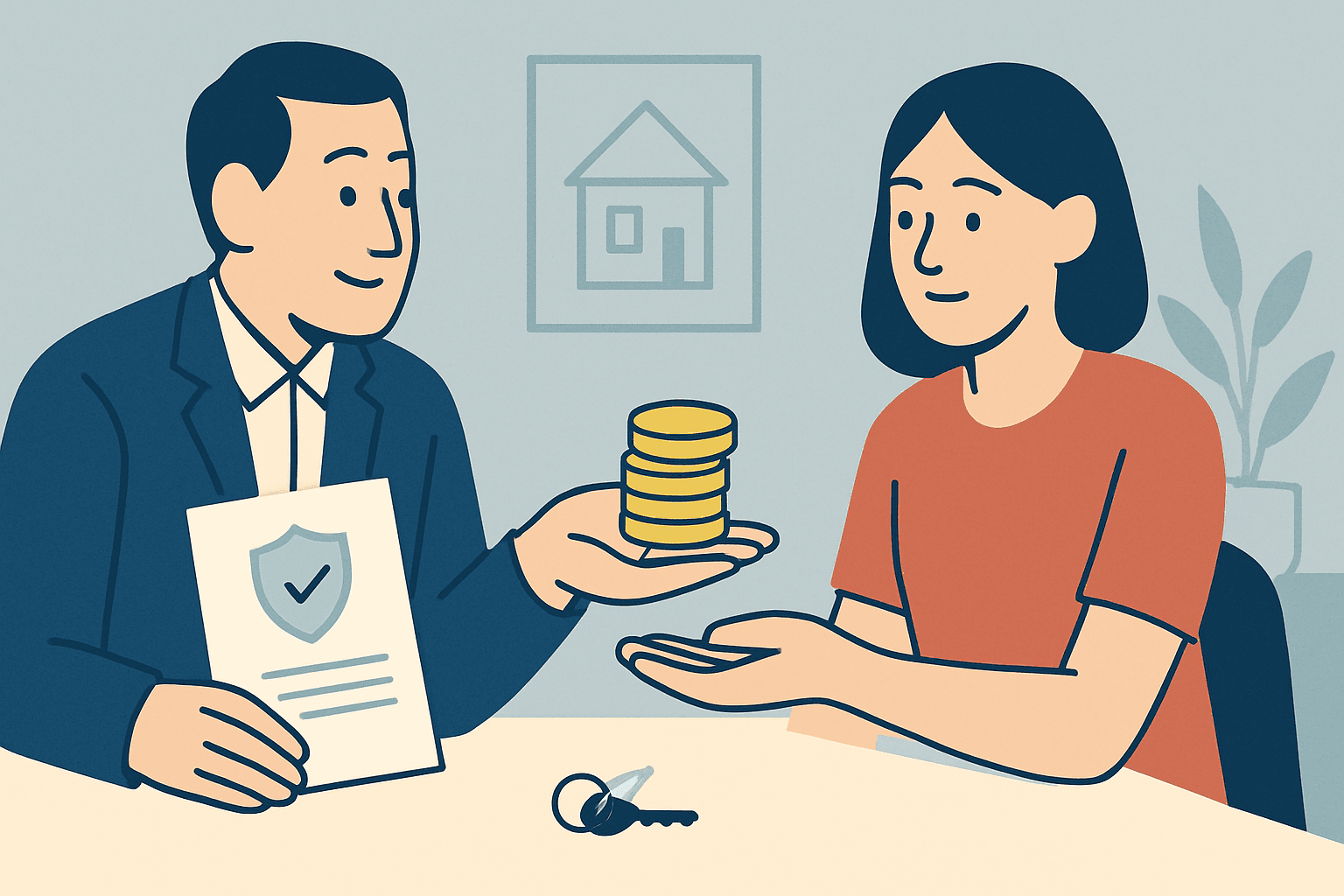
Leaving Your Home to Your Kids Without the Tax Surprise
The easiest way to pass down your house — adding your kids to the deed — is often the most expensive mistake. Here's how to avoid gift tax, capital gains, and family fights all at once.
Kwon CPA

Busy owners say it all the time: “I’ll just put the kids on the title now, so there’s nothing to deal with later.” The instinct is generous — you want to make life easier for your family. But one simple signature can create a gift tax filing obligation, eliminate one of the biggest tax breaks your family may ever receive, and trigger the very sibling conflict you were trying to avoid.
Let’s walk through one example. A house in Seattle was bought twenty years ago for $200,000 and is now worth $1.2 million. There is one parent and three children. The goal is simple: transfer the house to the children with minimal cost and conflict. Many people focus only on avoiding probate. That matters — but if probate is the only concern, you may lose far more in taxes and control than you save in court fees.
Why "Just Give It Now" and "Add Them to the Deed" Backfire
Start with the two most common shortcuts.
Gifting during your lifetime (signing a deed now): Giving away a $1.2 million asset requires a federal gift tax return. You may not owe tax out of pocket today, but you use part of your lifetime exclusion and create a filing obligation. The bigger issue is carryover basis: your children receive your old $200,000 cost basis. If they sell at $1.2 million, they show a $1,000,000 gain.
Adding kids to the title (joint ownership): People often think, “I’m not giving it all away, just adding names.” But transferring a present ownership interest is still a taxable gift, and those gifted shares carry your low $200,000 basis. Worse, your children become immediate co-owners. Their divorce, lawsuit, bankruptcy, or creditor problem can reach your home, and legally they may even be able to force a sale or interfere with your use of the property.
The signature that looks easiest today comes back as your family's most expensive bill.
Step-Up: The One Word Worth $200,000
The most important tax concept here is the “step-up in basis.” Your cost basis determines the capital gains result.
Give the house away while you are alive, and your children keep the $200,000 basis. A sale at $1.2 million means tax on a $1,000,000 gain. Let them inherit it at your death instead, and the basis resets to the date-of-death value of $1.2 million. If they sell soon after for $1.2 million, the taxable gain is zero.
Same house, same family — the only difference is when the transfer happens. That timing alone can be worth more than $200,000 in taxes. Gifting during life can also strip away the primary-residence exclusion you could have used yourself.
The TOD Deed: Half the Answer
A Transfer-on-Death (TOD) deed — sometimes called a beneficiary or “death” deed — is a real improvement over gifting or adding children to title.
- No ownership transfers while you're alive, so there's no gift tax reporting.
- You keep full control: sell, refinance, change your mind, or revoke it entirely.
- Because the transfer happens at death, your kids get the full step-up — $0 gain is possible.
- It bypasses probate.
So far, so good. But there is a major gap: a TOD deed decides who gets the house, and nothing about what happens after they get it. The moment you die, all three children own it jointly. If one is in the middle of a divorce or has tax liens, that share is exposed immediately. One wants to sell, one wants to rent, and one refuses to sign — a single holdout can freeze the property indefinitely. The TOD deed is useful, but it is a blunt instrument.
The Living Trust: Control, Taxes, and Peace in One Tool
A properly drafted and funded revocable living trust is often the cleanest answer. You create the trust, move the home’s title into it, and serve as your own trustee — keeping full control during your lifetime.
- Full control during your life (live in it, sell, refinance, amend)
- Avoids probate
- Preserves the full step-up at death, cutting capital gains tax
- Built-in instructions like "sell immediately and split the cash evenly"
- Shields a child's share from creditors and ex-spouses
- Sibling fights over selling vs. keeping
- A child's creditors, lawsuits, or divorce reaching the home
- A financially unstable child forcing a quick sale
- Confusion if a child dies before you do
The real power is that you can decide what happens after you are gone. You can instruct the successor trustee to sell the home and divide the proceeds equally, removing the keep-or-sell argument. You can give one child a right of first refusal on fair, defined terms. If a child is facing divorce or creditors, the trust can hold that child’s share under a trustee’s supervision so an ex-spouse or creditor cannot simply seize it.
Common-but-Flawed Methods, and Your First Step
- A will: Does not avoid probate. It is essentially an instruction letter to the probate judge — your estate still goes through the public, slow, costly court process.
- Doing nothing: Not a plan, just a mess handed to your kids. Intestate probate maximizes cost, delay, and the odds of a lawsuit.
- An LLC: Great for protecting rental property, but usually wrong for a primary residence. It can strip your homeowner tax exemptions and create messy tax issues.
- Write down the home's current value and its original cost basis. Start by seeing how much step-up is actually at stake.
- Honestly assess your children's situations — divorce, debt, business risk. The key question is whether any of them needs protection built in.
- Sit down with an estate attorney and CPA to design the trust, and finish the job by actually retitling the home into the trust (funding it).
A deed processed quickly at the recorder's office can be the most expensive decision you ever make. Always check the tax impact with a professional before changing title.
Real estate estate planning is not just about who gets the house. It is about how and when they get it, and which tax benefits survive. That difference can determine whether the home becomes a blessing or a burden for your children. Slow down and build the plan correctly.
Next step
How would this apply to your business?
Don't just read it. In 30 minutes we'll look at where you stand and what to clean up first.
Request a 30-minute consultation